 Huacachina Tours from Lima
Paracas or Huacachina? How to Choose or Do Both
Last reviewed September 2026
Paracas or Huacachina is really a choice between a marine reserve and a sand-dune oasis, and most travelers heading south from Lima end up seeing both rather than picking one. Paracas' Ballestas Islands boat runs a fixed 06:00 to 13:00 window and pairs with the Paracas National Reserve itself, open 09:00 to 16:00 with last entry at 15:00; Huacachina is a palm-ringed lagoon under dunes that rise roughly 200 metres (about 650 feet), a bit over an hour further down the Panamericana Sur. Tours that cover both Paracas and the oasis already run this exact combination in a single long day. Below is what each place actually gives you, and how to fit both in without missing the parts that matter.
Quick answer Reserve hours, fees, and whether you need one day or two
Paracas National Reserve is open 09:00 to 16:00 with last entry at 15:00, and the Ballestas boats run a separate, earlier 06:00 to 13:00 window; Huacachina has no gate hours at all, just a lagoon loop that takes about 15 minutes to walk around dunes rising roughly 200 metres. Neither place stands in for the other, and on this route you rarely have to choose.
Key takeaways
- Tours that already combine both stops run 16 to 19 hours door to door, with pickups between 04:00 and 05:00
- The Ballestas boat window is fixed at 06:00-13:00; the Paracas National Reserve itself stays open until 16:00, last entry 15:00
- A combined SERNANP ticket costs S/17 (about $5) instead of two separate reserve fees
- Huacachina's dunes climb about 200 m and the lagoon loop is a 15-minute walk, small enough to see properly in an afternoon
- Splitting the two across two days adds a night in Paracas without changing the route
- Wondering if the long day is worth it at all? The honest answer is one page over
Paracas and Huacachina, Side by Side
Paracas
- Paracas National Reserve: open 09:00-16:00, last entry 15:00
- Ballestas Islands boat circuit: about 19 km of water, roughly two hours, 06:00-13:00 only
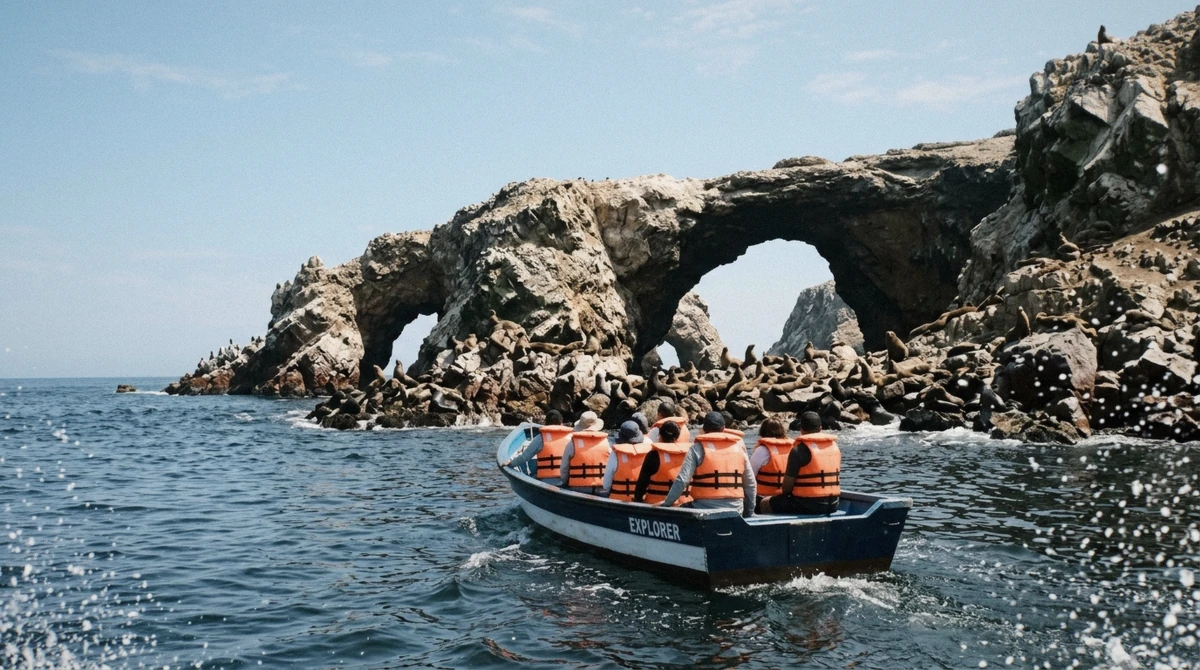
- Sea lions and guano birds close to guaranteed; penguins seasonal and shy; dolphins are luck
- Combined SERNANP ticket: S/17 (about $5) covers both the reserve and the Ballestas sector
- Coastal desert scenery, ocean air, the Candelabra geoglyph on the way out to the boats
Huacachina
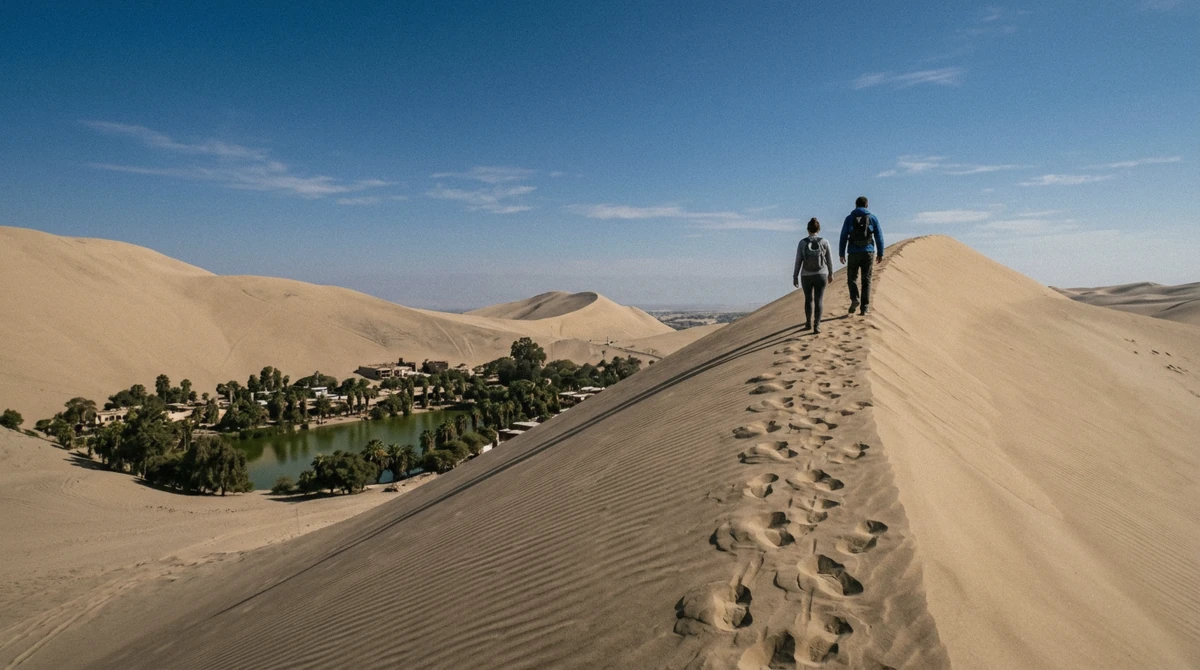
- Dunes rising roughly 200 m around a small permanent lagoon
- Dune buggy and sandboard sessions, run on-site by local operators
- Lagoon loop walk: about 15 minutes, no gate or opening hours
- Entry: S/8.50 for foreigners (about $2), S/4 for Peruvians
- Warm, dry desert air and the sunset light that draws the late-afternoon crowd
Verdict Neither place substitutes for the other. One is a marine reserve with a boat schedule; the other is a sand-dune oasis with none. Most Lima-based travelers do not have to pick: the tours built around both stops already run the loop in a single day.
What Each Place Actually Gives You
The two stops answer different questions, and the figures below come from SERNANP's published tariff for the reserve and the Ballestas sector, plus visitor reports and Huacachina's own posted entry fee for the oasis side.
| What you want | Paracas | Huacachina |
|---|---|---|
| Wildlife | Sea lions, guano birds, seasonal penguins | None; it is a desert lagoon |
| Landscape | Ocean, cliffs, the Candelabra geoglyph | 200 m dunes around a palm-ringed lagoon |
| Main activity | 19 km boat circuit, about two hours | Dune buggy plus sandboarding |
| Opening hours | 09:00-16:00 reserve; 06:00-13:00 Ballestas boats | No gate hours; walk the loop anytime |
| Entry fee | S/17 combo ticket (about $5) | S/8.50 for foreigners (about $2) |
| Time needed to do it properly | Half a day | A few hours, or overnight for sunset and sunrise |
What Paracas Does Better
The wildlife the desert cannot give you
Paracas is the wildlife half of this trip, and the reason a Huacachina day tour leaves Lima before dawn. The Ballestas boats run only 06:00 to 13:00, authorised operators only, and the circuit covers roughly 19 kilometres of water over about two hours without ever landing on the islands themselves. Sea lions and the guano birds that give the reserve its name are close to a sure thing; Humboldt penguins turn up on some runs and hide on others; dolphins are the bonus every listing mentions and none of them promises.
None of that exists on the Huacachina side of the trip.
The reserve itself, not just the boat
The Paracas National Reserve is a separate, larger visit from the Ballestas boat trip, and it runs on its own clock: gates open at 09:00, close at 16:00, and the last ticket is sold at 15:00, at the Santo Domingo checkpoint. Most one-day Huacachina tours from Lima only touch the Ballestas sector because the reserve's daytime window does not fit an itinerary that also needs to reach the dunes before dark. Travelers who want the reserve itself, not just the boat ride past it, are better served by a tour built to include it, or by the two-day version below.
A single ticket for both
SERNANP sells the two Paracas sectors as one S/17 promotional combo (about $5) rather than charging separately for the reserve and the Ballestas access; children under five enter free and visitors aged five to sixteen count as minors at S/3. A day trip that already includes this fee in its price has effectively bought you both halves of Paracas for less than the cost of a coffee and a pastry in Lima.
What Huacachina Does Better
The desert has no schedule
Huacachina runs on no clock at all. There is no gate, no last-entry cutoff, no boat window: the lagoon loop is an easy 15-minute walk, the dunes around it rise to roughly 200 metres, and you can be on the sand at sunrise or sunset with nobody checking a ticket. That freedom is the trade-off for having no wildlife and no reserve status to protect it.
The activity is the point, not the scenery
Where Paracas is mostly watched from a boat, Huacachina is done. The dune buggy climbs and drops fast enough to feel like a ride, and it stops on the crests for sandboard runs. Boards on the standard tours are artisanal and ridden lying down, waxed by the driver between runs; standing up is a separate sport with a separate operator, arranged at the oasis itself rather than through the day-trip companies.
Entry to the village and lagoon costs S/8.50 for foreigners (about $2) and S/4 for Peruvians, a fraction of what the Paracas side charges for far less activity.
One honest caveat
The lagoon itself is not entirely natural, and that story is worth its own page rather than a footnote here. What actually keeps the water in the oasis is a separate question from whether the dunes are worth the drive, and the two answers do not always agree.
Doing Both in One Day
This is the default on this route, not a stretch goal: guided day trips from Lima that cover both stops run 16 to 19 hours door to door, with pickups between 04:00 and 05:00 and returns anywhere from 21:30 to 23:45 depending on the operator and whether the itinerary includes the sunset slot at the dunes. The early start exists entirely because of the Ballestas boat window: missing the 06:00 to 13:00 slot means missing the wildlife half of the day, so every operator on this route builds the schedule backward from that boat departure.
What the order usually looks like
Pickup in Lima before sunrise, three to four hours on the Panamericana Sur to the Paracas pier, the Ballestas boat circuit while the morning window is still open, lunch on the way south, then the buggy and sandboard session at Huacachina in the afternoon or at sunset, followed by the drive back to Lima. Turismo iPeru's day trip is built exactly on that structure, with the buggy, the sandboard and every admission ticket already paid before you leave Lima.
Where a long day actually strains
Nine or more hours of that day are spent in a seat, and the Paracas National Reserve itself, as opposed to just the Ballestas boat, is often the piece a compressed one-day itinerary drops, since its 09:00-16:00 window competes directly with the drive to Ica and the dunes. If seeing the reserve on land matters as much as the boat, ask what exactly a listing includes before booking the cheapest option.
Doing Both Across Two Days
The choice between one day and two comes down to what the reserve's own hours let you fit in, and the table below lines up what each plan actually covers, drawn from the two-day listings on this route and the standard one-day itinerary.
| Plan | Nights | Paracas National Reserve (land) | Best for |
|---|---|---|---|
| One-day trip | None | Usually skipped; Ballestas boat only | Seeing both places once, in one push |
| Peru Hop 2-day | 1, in Paracas | Included, plus Hacienda San José | Wanting the reserve on land, not just the boat |
| Nazca flight 2-day | 1, in Huacachina | Not included; adds a Nazca Lines flight instead | Combining Huacachina with Nazca rather than more of Paracas |
Splitting the trip over two days does not change the route; it inserts a night in Paracas between the two halves, which is the only way to fit the reserve's own 09:00 to 16:00 window in alongside the Ballestas boat without racing the sun to Huacachina afterward. Peru Hop's two-day tour is built for exactly this: it adds a full visit to the Paracas National Reserve and the Hacienda San José slave tunnels on top of the usual boat trip and dunes, spread across two calmer days instead of one long one.
The catch: accommodation is on you
Neither of the two-day options on this route includes a room in its headline price. The dorm option on Peru Hop's tour is a shared six-bed room with a private bathroom, which keeps the add-on cost down, but anyone wanting a private room is paying for it separately. Compare that cost against a single long day before assuming two days is automatically the more relaxed choice: it is calmer per hour, not necessarily cheaper overall.
Where to Sleep if You Pick One
Staying at the oasis puts you within walking distance of the dune buggy queue and the sunset light, which matters if the buggy and sandboard session is the whole point of the trip for you. Staying in Paracas puts you a short walk from the pier for the earliest boat slot, which matters if wildlife is the priority and you want first pick of the morning departures rather than a later one after the day-trip buses have arrived. Because the reserve gate does not open until 09:00 and closes to new entries at 15:00, a Paracas overnight only pays for itself if the plan includes a second morning inside the reserve on land, not just the boat circuit.
A full comparison of where to sleep on this route, Huacachina against nearby Ica, covers the actual room prices on both sides.
Paracas vs Huacachina, Answered
Is it better to stay in Paracas or Huacachina?
It depends on which half of the trip matters more to you. Paracas puts you near the pier for the earliest Ballestas boat and, if your plan allows it, a second morning inside the Paracas National Reserve before its 15:00 last-entry cutoff. Huacachina puts you on the dunes for sunset and sunrise with no opening hours to plan around. Most day-trip travelers skip the choice entirely and see both on a single guided day.
Are Paracas and Huacachina both worth visiting?
Yes, and for different reasons: Paracas for the wildlife and the reserve, Huacachina for the dunes and the buggy. Neither one replaces the other, which is why most tours from Lima route through both rather than treating them as alternatives.
Is Paracas, Peru worth visiting on its own, without Huacachina?
Yes. The Ballestas Islands boat circuit and the Paracas National Reserve are a full half-day on their own, with sea lions and guano birds close to guaranteed and the reserve open 09:00 to 16:00 for anyone who wants to see it on land rather than only from the water.
Which is the nicer part of Peru, Paracas or Huacachina?
They are not really comparable: Paracas is a coastal marine reserve and Huacachina is an inland sand-dune oasis, about an hour and a half apart on the Panamericana Sur. Travelers who want ocean and wildlife tend to prefer Paracas; travelers who want dunes and a buggy ride tend to prefer Huacachina. Most itineraries from Lima give you both in the same day.
Can you visit Paracas and Huacachina in one day from Lima?
Yes, and it is the standard itinerary on this route rather than an exception: guided day trips run 16 to 19 hours door to door, with pickups between 04:00 and 05:00 to make the Ballestas boat's 06:00 to 13:00 window before continuing on to the dunes.
What are the Paracas National Reserve's opening hours?
09:00 to 16:00, with the last entry at 15:00 and tickets sold at the Santo Domingo checkpoint. That is a separate window from the Ballestas Islands boats, which run earlier, from 06:00 to 13:00, with authorised operators only.
Treat the question as a scheduling problem rather than a preference, and it mostly answers itself. The boat has a morning window, the reserve has a daytime window, and the dunes have none at all, which is exactly why the standard Lima itinerary visits them in that order and in a single push rather than asking anyone to choose.